

 JOIN
Most drivers don’t struggle because they lack information. In fact, many drivers are drowning in it. They watch videos, listen to coaches, ask mechanics, study onboard footage and spend hours thinking about how to improve.
Yet many eventually find themselves stuck. Not because they’re lazy or stop learning. Most drivers don’t stop improving because they run out of things to learn. They stop improving because every coach, mechanic, teammate and YouTube video gives them a different answer.
That confusion is what ultimately led me to develop my coaching philosophy.
Most coaching teaches answers
The traditional coaching model is simple. A driver has a problem and the coach provides a solution. Brake later. Turn earlier. Add front grip. Lower the tyre pressures. Change your line. The advice itself is often correct.
The problem is that drivers become dependent on solutions instead of understanding. The moment conditions change or the kart behaves differently than expected, confidence disappears. The driver is left searching for another answer.
I know because I was one of them. For years I searched for answers everywhere. I listened to experienced drivers, mechanics, coaches, videos and articles. Sometimes the advice worked. Sometimes it didn’t.

What frustrated me wasn’t that something failed. It was that the logic constantly collided. One person would swear by a setup change. Another would tell me to do the complete opposite. One driver would love a driving technique that another driver hated. Every time I thought I understood something, a new experience would challenge that belief.
I kept asking the same question: Why does it work for them, but not for me?
That question eventually became the foundation of how I coach today.
Most karting education teaches what worked for somebody. I explain the principles behind why it worked.
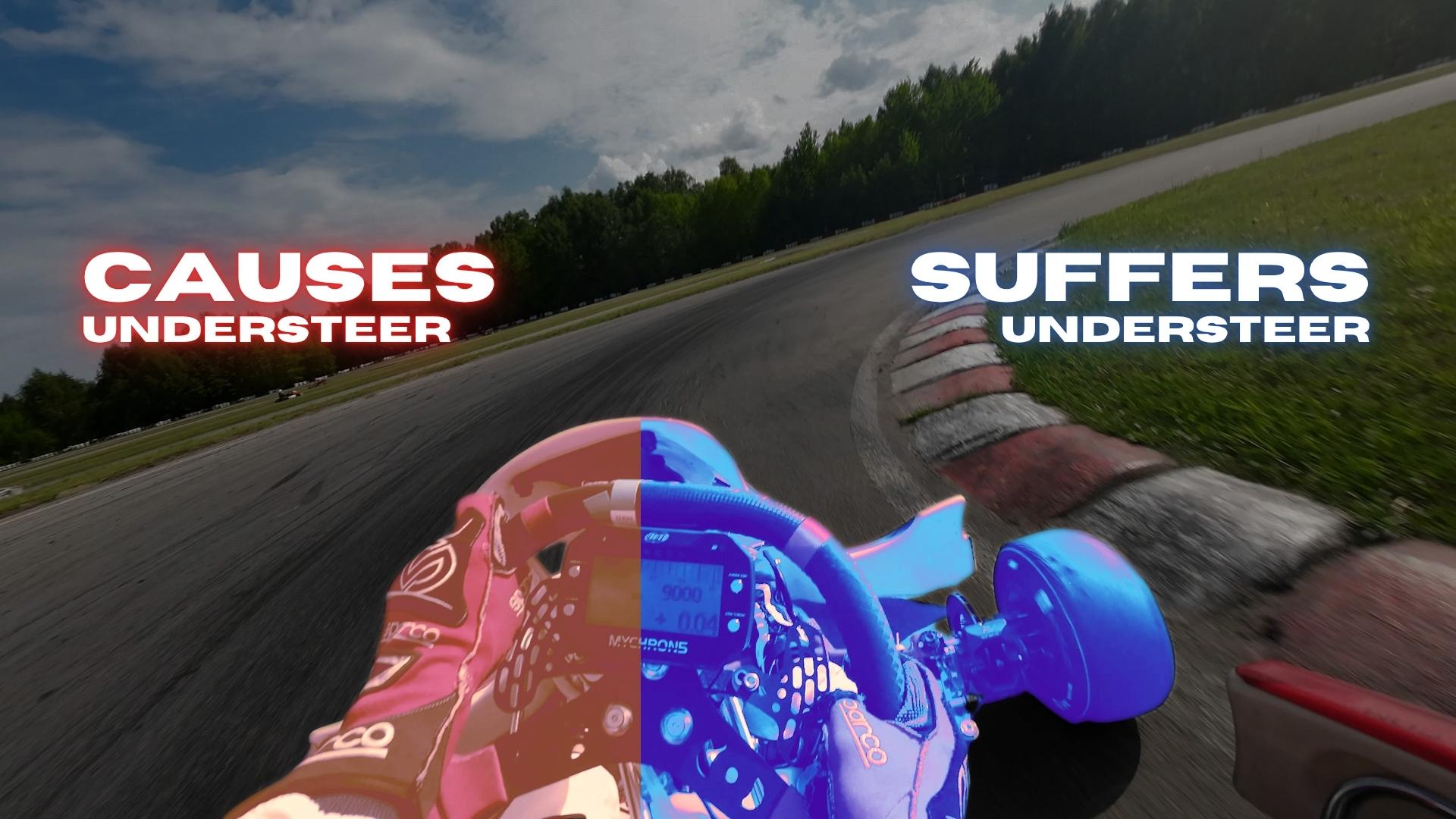
Same symptom, different problem
Take a simple example. Two drivers complain about understeer. At first glance the problem appears identical, but the underlying cause can be completely different.
One driver may genuinely lack front grip, while another simply enters the corner too fast and overloads the front tyres. The symptom sounds the same. The solution isn’t.
This is exactly why understanding principles matters. The fastest drivers aren’t the ones with the most answers. They’re the ones who know which answer applies to their situation.
My coaching starts with principles
Drivers rarely need big changes when I start working with them. They first need to make the most of what they already have.
That often means shifting their focus from “how do I make this comfortable?” to “I need to perform right now”. When a driver stops blaming everything else, they start understanding their own contribution to performance. Everyone wants to tweak their kart to perfection, but the obvious gains are usually driver-dependent and often the least interesting part of the puzzle.
Once the driver understands their own contribution to performance, the conversation changes completely. Only then does karting become truly individual.
Context changes everything
What happens on the kart depends on your driving style, body build, strengths, weaknesses and preferences. To truly tailor a kart, you have to escape the “Symptom A → do B” trap.
You need to understand why B works first, then decide whether it actually suits you, your kart and the conditions. The driver is part of that context. The conditions are part of that context. The kart itself is part of that context.
That’s why I don’t tell drivers what to do. I want them to understand why.
“After working with Ragnar for years, I think like KartletiX now. I intuitively set up the kart like him – I spot the nuances in chassis behaviour and driving that lead to it.”
Roger Young
A complete view of performance
Karting performance is never one thing. Driving technique affects setup. Setup affects tyre behaviour. Tyres affect confidence. Confidence affects decision-making. Physical preparation affects control. Control affects consistency.
Everything is connected. This is one of the reasons my coaching philosophy extends far beyond racing lines and lap time analysis. The objective is not to fix isolated mistakes. The objective is to understand the complete picture.
Because the fastest improvement rarely comes from fixing one mistake. It usually comes from understanding the principle that created ten of them.

Understanding creates independence
A driver who understands principles becomes independent. They stop relying on somebody else’s interpretation of the kart and start developing their own.
That independence is powerful because faster drivers aren’t faster because they know more information. They’re faster because they consistently make better decisions.
“Ragnar impressed me with feedback that’s tailored to my individual driving style. He turned complex data into clear, actionable feedback.”
Luke ArmstrongEvery driver has different strengths, limitations and ways of creating speed. Understanding those differences is often more valuable than another setup adjustment.
“Things I hadn’t even thought about before make total sense now. Explained what I should do and what I’m doing wrong. I’ve found 1.5 seconds.”
Pablo Furett da CostaThat same philosophy is what drives every coaching resource, course and program I build at KartletiX. If you’d like to explore what I do and stand for further, you can find my latest coaching resources and upcoming programs here.
Conclusion
Drivers do not plateau because they stop learning. They plateau because they accumulate more information than understanding.
The purpose of coaching is not to provide answers. The purpose is to help drivers understand the principles that make those answers work.
Because once you understand why things work, improvement stops depending on who you ask. It starts depending on how well you think.


